Resources/Information
Some information snippets on teens, health and wellness
ADOLESCENCE: THE BRIDGE BETWEEN CHILDHOOD AND ADULTHOOD
The bridge between childhood and adulthood is a precarious one called adolescence!
THE CHILD NEEDS TO CROSS THIS BRIDGE ON THEIR OWN- BUT HOW CAN WE HELP TO PROVIDE A GOOD STRONG RAILING SO THAT THEY DON’T FALL INTO THE PERILOUS WATER BELOW?

Here are 10 factors that can help build a good, protective “railing:”
1. Family – be there on the sideline, take interest, give love, even if it is responded to with “grunts.”
2. Sensible peers – help your child to discern between sensible peers and those who maybe a bad influence… peers are so important to them at this stage and such a major influence.
3. A good “radar” – a solid foundation of rights and wrongs should be built up throughout childhood to prepare teenagers for the difficult years, in which they certainly need a good “radar” to sniff out right from wrong.
4. Role models/mentors – that’s us folks! Set a good example. Other role models include family and godparents, grandparents, adult friends etc. Don’t let the social media influencers take this role away from you.
5. Teachers– a good teacher / housemaster radiating solid values can make such a difference to a teenager.
6. Sport – distraction, camaraderie, getting rid of hormone-driven anger and frustrations, exercise, fun: there are countless, countless benefits of exercise in teenagers.
7. Community– the greater community can help to form a village to protect its adolescents.
8. Spirituality – a solid spiritual foundation, a worship community, a church congregation, youth groups- all can help to give the adolescent a sense of purpose and belonging.
9. Enough sleep – no explanation needed (just think how you feel when sleep deprived – short tempered, emotional … exaggerating the normal adolescent emotions!)
10. Healthy diet– a healthy, balanced diet is needed to facilitate the rapid growth during adolescence – food fads and over-consumption of sugar can lead to irritability and poor functioning.
THE SEVEN SECRETS TO UNDERSTANDING TEENAGERS
Has your gorgeous chatty boy turned into a monosyllabic grunter? These 7 facts about adolescence will hopefully help parents (and teenagers) to navigate these years

Being a teenager is a time of turmoil, triumph and trouble, in a constant tug of war between childhood and adulthood. Sometimes, they’ll revert to acting like a child (tired, hungry, hormonal), and often to the level of the two year-old with tantrums!
Sometimes, the pull will be towards maturity, and for moments they’ll have the whole family beaming with pride as they talk the most miraculous sense for a period of time. More often than not, they’ll will hover in the middle! A lot of this has to do with hormones, chemicals and brain immaturity.
These 7 facts about adolescence will hopefully help parents (and teenagers) to navigate these years:
1. The teenage brain is still developing:
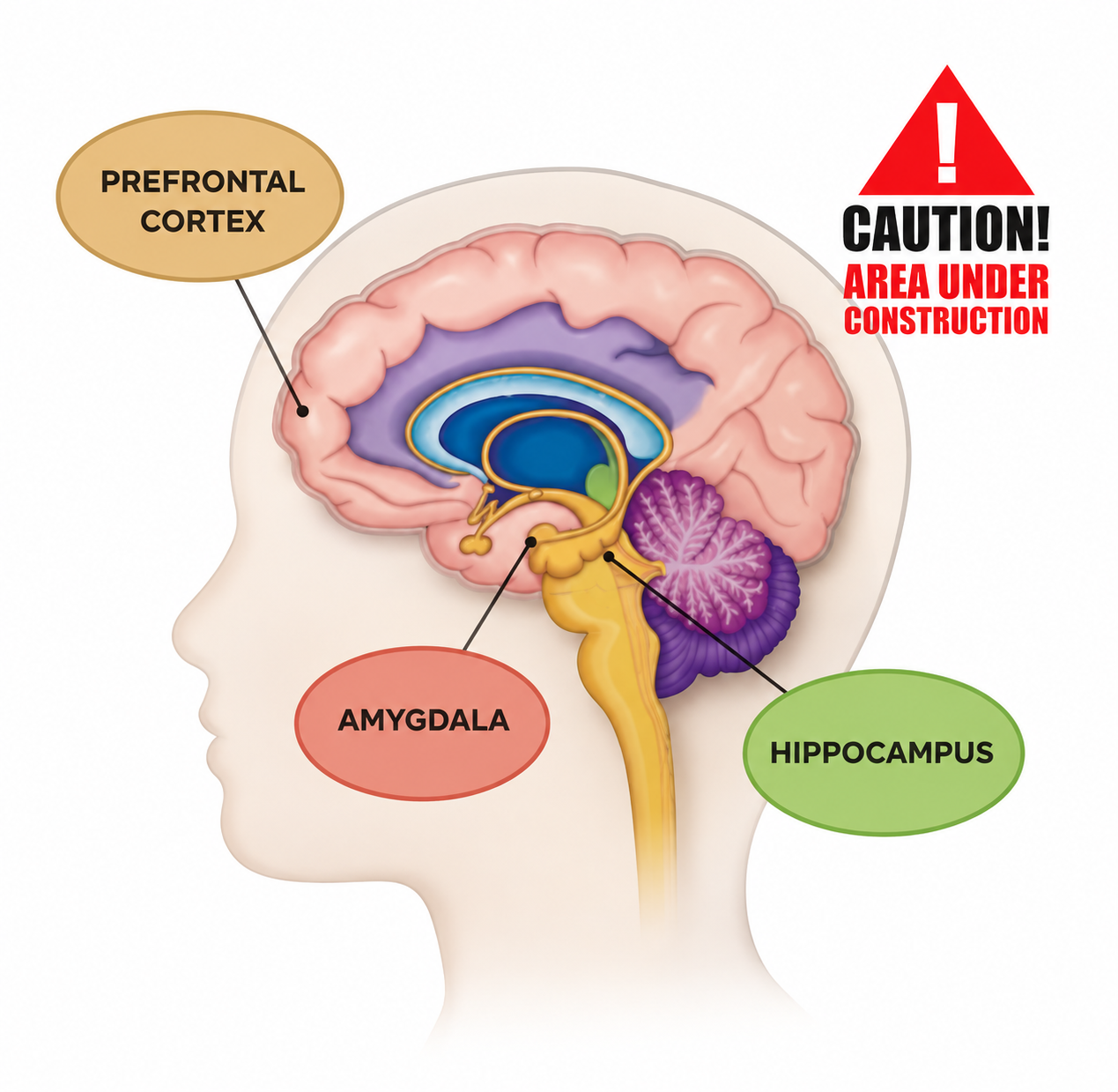
– the prefrontal cortex (responsible for impulse control and managing emotional reactions) is not yet fully developed until the early 20’s
– Some decisions and responses which are later made in the prefrontal cortex are made in area called the amygdala.
– Responses originating from amygdala are driven by emotion, aggression, impulses and instinctive behaviour.
2. The teenage brain is easily influenced by physical factors
– The pleasure centre in brain which secretes dopamine is easily activated, especially by factors leading to instant “highs”/instant gratification. This makes teenagers more prone to risk-taking behaviour, repetitive behaviours and addictions.
3. Hormonal shifts are massive and relevant
– This will lead to tiredness, moodiness, and often vagueness and forgetfulness. It’s not called the “teenage fog” for nothing!
4. Multitasking is very hard for the teenager, especially teenage boys
– The only multitasking they can usually manage competently is walking and eating at the same time (or anything and eating at the same time really!) The teenage brain generally does better with the simple “one thing at a time.”
5. Teenagers tend to live in the moment
– Planning ahead is difficult for young teenagers in particular, and they work better under pressure with an immediate deadline. Last minute.com.
6. The teenage heart yearns for acceptance
– The opinion of peers becomes important, social media takes centre stage and the opinion of the parents is simply “irritating” and “out of touch!”
7. The teenager looks through a narrow lens
– Young teenagers tend to think mainly about themselves, not for the greater good of the family/community.
AND ALL OF THIS, FRUSTRATING AS IT IS, IS NORMAL FOR TEENAGERS! USING THESE FACTS AS A BACKBONE, WE LEARN THAT WE NEED TO ADOPT A SLIGHTLY ALTERED PARENTING STYLE FOR OUR TEENS IN COMPARISON TO OUR TOTS.
HABITS AND ADDICTIONS IN TEENS
The teen brain enjoys instant gratification and its immaturity makes it more prone to repetitive behaviour and addictions.

Please discuss some of these potential dangers with your teens:
1. Smoking– lung damage, predisposition to various cancers, vascular disease, heart attacks… the list of the damaging effect of smoking is endless. Apart from that it’s just selfish for other to have to inhale poison because of your habits. Children suffer. Asthmatics suffer. Just . Don’t. Ever. Start. It’s actually pretty uncool these days.
2. Vaping– a teenage disaster. Punted as healthier than smoking, this has become a multi-billion dollar industry, basically based on lies, and poorly regulated. Inhaling damaging chemicals with largely unknown long term side effects, inhaling food chemicals/fragrances which are not meant to be heated up and inhaled…no wonder this has led to an epidemic of teens and young adults with a mysterious lung disease, deaths, lung transplants. Just plain stupid. Don’t be fooled.
3. Alcohol– with the underdeveloped prefrontal cortex, the teenage brain is prone to earlier disinhibition by alcohol, getting really drunk, doing ultra-stupid things, putting themselves at danger of teenage pregnancies and STD’s, inhaling vomitus and even dying. Set a good example. Teach them the early signs of “having had enough.” Beware of “open” parties, unsupervised by parents. Remember that it is illegal to serve alcohol to your child’s friends who are under the age of 18.
4. Cannabis and other drugs – these appeal to the pleasure-seeking centre of adolescents and lead to quick highs, but terrible lows. A drug like cannabis leads in the short term to inhibited judgement and paranoia; long term it is associated with possible cognitive decline and increases schizophrenia. Is it really worth it??
WORK HARD ON BOOSTING YOUR TEENAGER’S SELF-ESTEEM AND TELL THEM TIME AND TIME AGAIN THAT THEY ARE GOOD ENOUGH JUST AS THEY ARE. THEY DO NOT HAVE TO PROVE THEMSELVES BY PARTAKING IN HABIT-FORMING ACTIVITIES.
COMMON ILLNESSES:
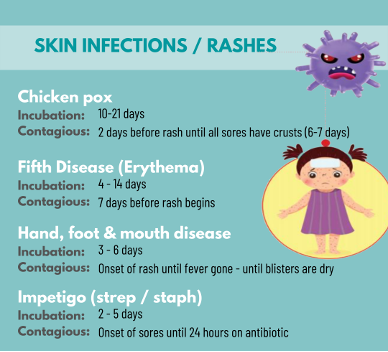
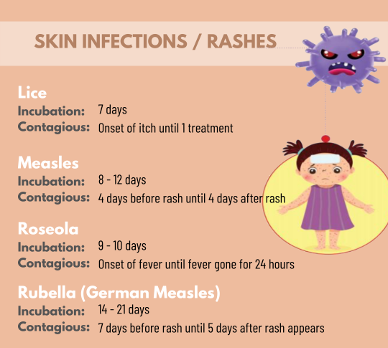
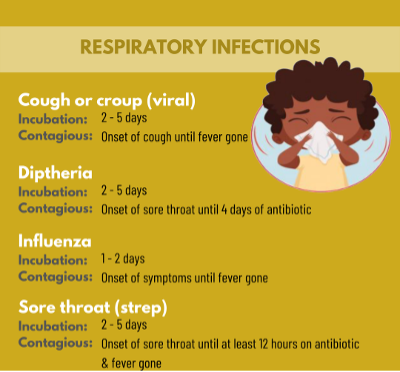
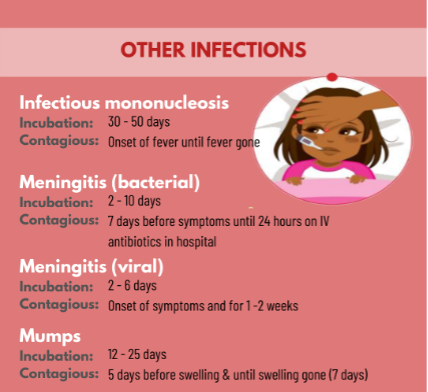
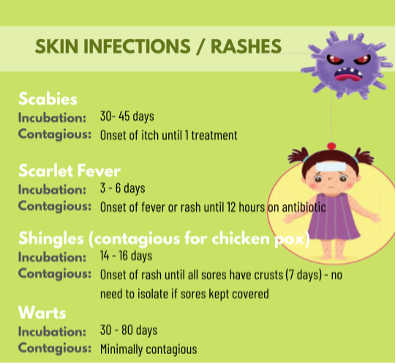
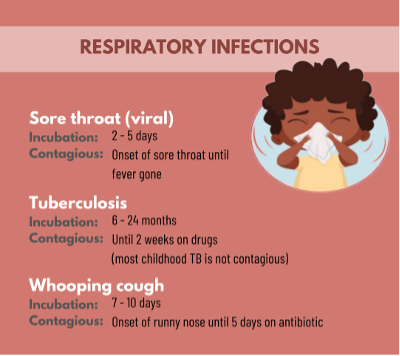
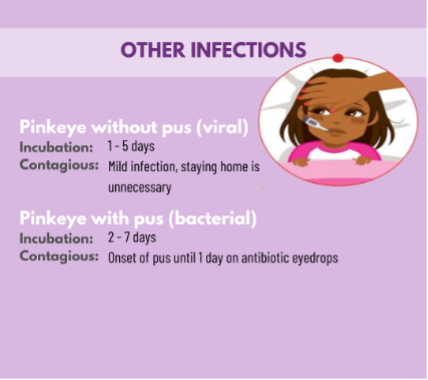
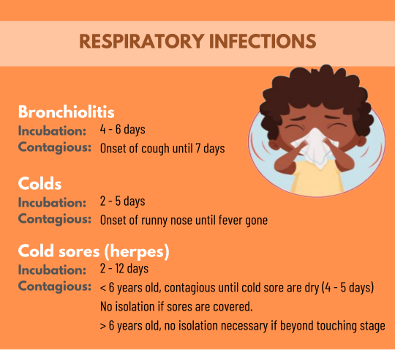
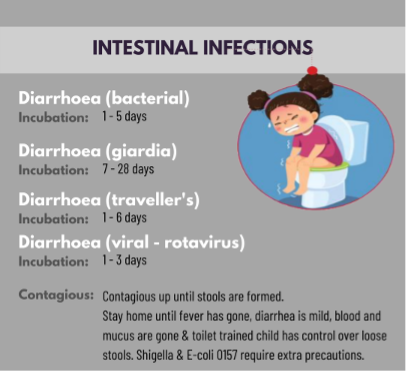
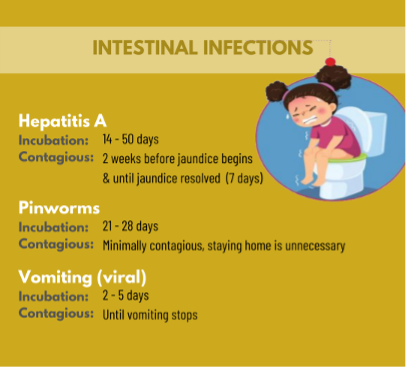
Incubation and Infectious Periods
MANY COMMON childhood illnesses are usually very contagious!This infographic shows some of the incubation periods (how long it takes to fall ill after exposure to someone with the illness) and also information on how long a child/teen is infectious to others. This is useful in planning return to school and socialising after illness.